
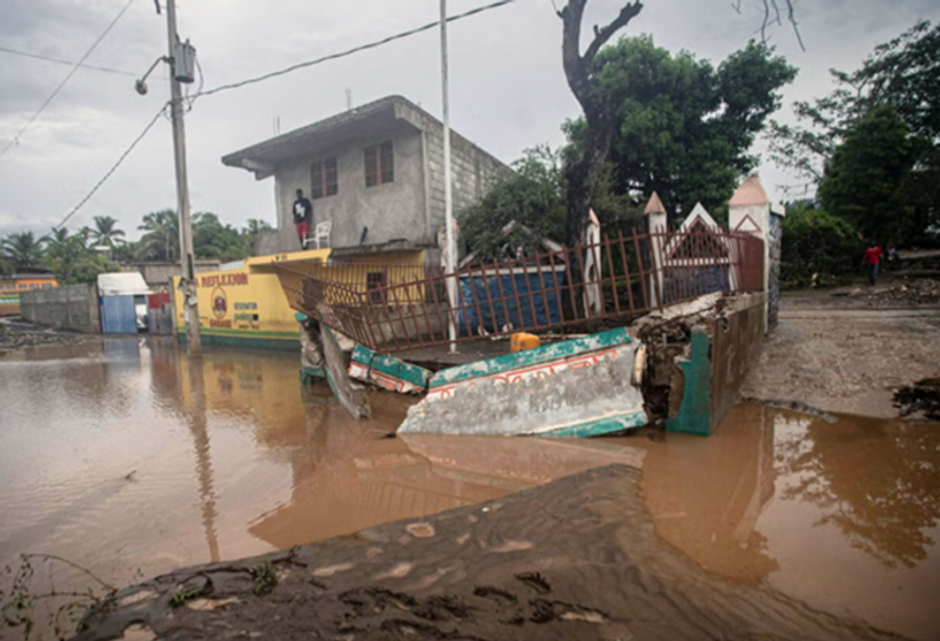
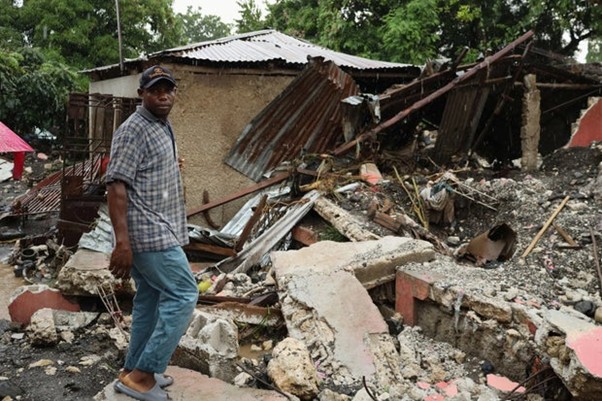
Petit-Goave, Haiti, Oct. 30, 2025. (AP Photo/Odelyn Joseph)
Melissa, a Category 5 hurricane, one of the strongest Atlantic hurricanes on record, flooded nearly 19,000 homes and destroyed 1,500 others after its outer bands battered Haiti. 254,000 people have been directly affected. The hurricane caused significant damage in the communities of Léogâne and Petit-Goâve, (in the Southwest) including the destruction of homes, schools, and churches, as well as the loss of electricity and clean water. In addition to physical devastation, the storm led to severe flooding, which damaged roads and contaminated water sources, and increased the risk of disease outbreaks and severe landslides. The destroyed roads disrupted supply chains, market access, and the delivery of emergency humanitarian assistance.
The death toll in Haiti from Hurricane Melissa is listed as 43, of whom 10 were children, with 13 others still missing. At least 25 deaths of these deaths occurred in the southwestern coastal town of Petit-Goâve, one of the hardest hit communities, after La Digue river burst its banks and flooded nearby homes. Rescue efforts were hampered by mudslides.
The Pan American Health Organization (PAHO) reports that at least ten health facilities sustained damage and that access to clean water has been compromised in multiple localities, raising concerns about waterborne disease outbreaks, such as cholera.
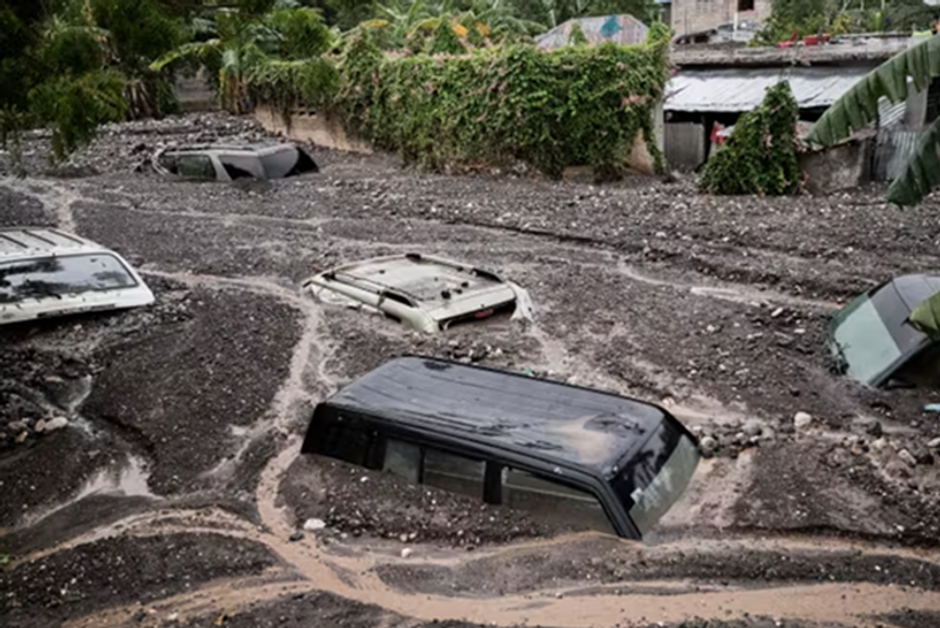
Petit-Goave, Haiti, Oct. 30, 2025. (AP Photo/Odelyn Joseph)
Agricultural losses are also significant, threatening food security and livelihoods in already vulnerable rural communities. Banana, sorghum, pigeon pea, maize, fruit tree, root, and tuber crops were damaged. Lots of plantain trees and bushes that grow congo peas were lost in the massive flooding and winds from Hurricane Melissa, worsening the already precarious living conditions of these households. Though this is not an immediate need it WILL impact these families for a long time. The income from growing & selling these crops helps families buy other food, pay school, etc. Households in the south will continue to suffer the residual effects of the hurricane until at least the end of the year, experiencing negative impacts to the winter season (starting in December), and possibly even the start of the spring season. This will limit the ability of farmers to hire workers or purchase seeds.
In response, the Haitian government has begun distributing seeds, tools, and essential goods to affected farmers as part of early recovery efforts.
The U.N.’s World Food Program has distributed food to more than 40,000 people. WFP Assessment Nov.25th: Critical Gaps in Water, Sanitation, and Hygiene (WASH) In the aftermath of Hurricane Melissa, 60% of households are relying on natural water sources or wells, often facing shortages due to broken systems, while 67% practice open defecation and only 33% use latrines—conditions that expose communities to health risks and potential disease outbreaks, underscoring the urgent need for investment in WASH infrastructure to restore safe and dignified living conditions.
ROTARY’S RESPONSE:
The Rotary Club of Léogâne, true to its mission of providing aid, assistance, and relief to populations affected by natural disasters, has collaborated with first responders, the Mayor’s Office of Léogâne and Petit-Goave, as well as Civil Protection and other civil society organizations, to adopt an emergency intervention plan for the victims of Melisssa.
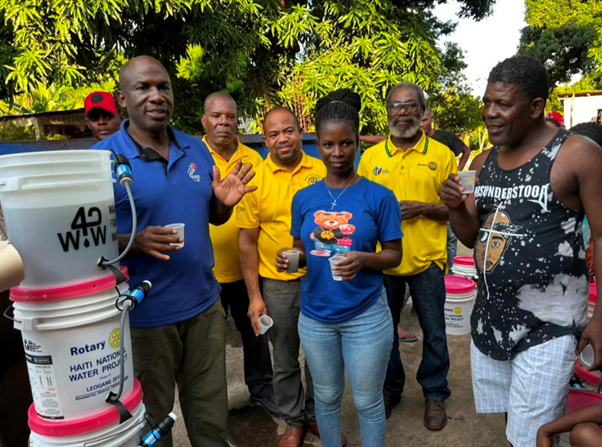
Photo: Rotary
Report from PAG Fritz Pierre-Louis: In Léogâne and Petit-Goâve, unfortunately, the situation remains quite challenging. Many homes are still affected by significant mud accumulation, and the streets are flooded, with water flowing under the farms stopping the kids from getting to school. The local rivers are in dire need of dredging to alleviate some of these issues. The need for support is urgent. The local population requires assistance to help the Mayor’s offices in their efforts to clear debris from the roads and within homes, schools, and clinics.
To facilitate this recovery, essential resources are needed, including water filters, hygiene kits, wheelbarrows, shovels, and the rental of heavy equipment such as backhoe loaders, bulldozers, trucks, and loaders. Additionally, fuel is necessary to aid in the cleanup efforts, ensuring that families can restore their homes and that children can safely return to school.
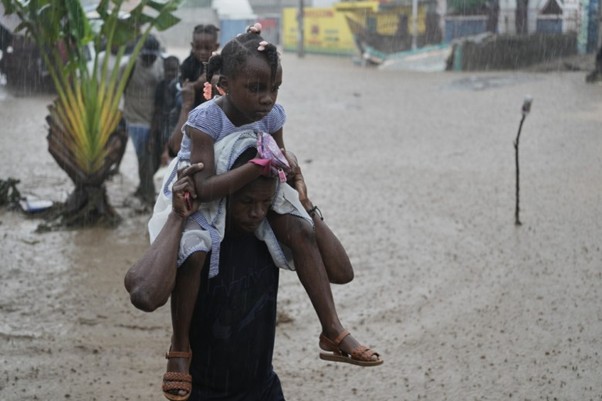
Petit-Goave, Haiti, Oct. 30, 2025. (AP Photo/Odelyn Joseph)
ROTARY DISTRICT 7020 (which includes Haiti) District Governor William Aiken: Rotary is not an abstract entity headquartered in Evanston but is instead found in the collective action of all our members and our clubs who recognize the immediate and long-term needs of those affected by hurricane Melissa, and respond as People of Action with projects and programs to address those needs in an impactful, transformative and sustainable way, using a variety of funding mechanisms at our disposal.
Rotary is addressing the critical lack of dry, safe housing and safe drinking water in the flooded South.
Key Interventions:
- Water Filtration: Deploying units to combat the cholera outbreak.
- Logistics: Using local networks to bypass damaged roads and reach Petit-Goâve.
Report on HANWASH WATER POINTS: (extract)
Prepared by Hilaire Jean Dumont LEGRAND
Consultant, Site Supervisor Engineer.
Egeder Pq Fildor / REUTERS
Hurricane Melissa caused flooding in several areas, including the municipality of Cavaillon. These floods potentially affected the hydraulic infrastructure used to supply drinking water to communities. An assessment mission was therefore conducted by HANWASH to inspect water points, analyze the damage, evaluate water quality, and identify urgent rehabilitation needs. Nine sites were targeted, but some were temporarily inaccessible due to damaged roads. The results show that:• The majority of water points are functional, but some are affected by corrosion and contamination.• The Labiche water point is not functional.• Several water points require inspection of the borehole casing.• No water point has the necessary equipment for chlorination.• The Bricourt water point is closed.• The Gwayav point is completely non-functional. Implementing the proposed recommendations will strengthen the resilience of infrastructure and improve the quality of services offered to communities.