Good Morning PDG. The Cavaillon well has been recently completed. In addition to focusing in on Cavaillon, I’d like you to discuss Global Grants, as you have the expertise there – the kind of pitfalls, the difficulties, the successes, of actually pursuing, and being awarded a global grant.
So, let’s start with the needs assessment.
PDG ROBERT LEGER:
Obviously, the needs assessment is something that I think that a lot of Rotarians don’t take seriously, but equally obviously, is incredibly important.
I think that’s the 1st thing for any project.
With a Global Grant, you cannot go and impose a project on a community. So you need to have an assessment to evaluate their needs.
Sometimes in the past, it has happened that good volunteers, like missionary groups, they go to RI, and they want to create a project that they think the community needs. But when they actually ask the people, ‘Do you really need that?’ They say, Instead of that, we would prefer to have water, not the refurbishing of a school, for example.
So it’s important to go to the community, much more important, when they come to you. Many times, they come to us, asking for a project to help them. I remember when they came once, for a project, they had a well, on the far side of the national road, so they had to cross it to fetch water.
So they came to the club asking, ‘Can you help, can we have a well on this side, so we don’t need to cross the national road?’ And I remember Rosa (Leger) was President at that time, and she found the funds. And we did the project, and they were so happy, and they did a very nice inauguration for that well on that side.
On the day of the inauguration, I was watching how the kids, young people, adults, were coming from the mountain, because it’s down in the valley, of a big mountain. They were fetching water, and going back on foot, and I said to myself: Wow, what if we put gutters on their houses to catch rainwater? And like that, we can have water, a cistern to collect water.
And by chance, we had a member, with an engineering background, in hydro, and he calculated how much rain they have in the area, and it became a great success.
So the community assessment is very important.
It should be the first step for any project.
Sheila Bethel
I know that a number of projects, I believe, have failed within the Rotary community because of lack of proper assessment beforehand. We’ve been talking about needs assessment, but what I’d like to jump to next is government cooperation, local cooperation with the mayor with different local boards, etcetera. How do you set about that and could you emphasize the importance of that?
PDG ROBERT LEGER:
This also is very important.
When you do the community assessment, you meet with many people in the community, that means you meet the beneficiaries, then you meet with the local authorities in Haiti, the local level authority is CASEC, (Conseil d’Administration de la Section Communale), and the Mayor and Municipal Council, because in the remote communities, you have CASEC controlling the area.
You also need to take in consideration ‘civil authorities’ I call them, such as a pastor, a public notary, people that are very important in the community. Also, you need to approach the voodoo priest, you know, because maybe you have the voodoo religion, and you need to make sure all these are involved in understanding the project, so we have all these coming together.
And they talk about their needs, concerning the project, and the buying of the project. And it’s important that you understand their perspective, because you will need to count on them now, to set up the group that will manage the project.
Now, let’s talk about water. It can be any project, education, whatever, but let’s talk about water. You cannot go and do things now without the national regulator, called DINEPA (National Directorate for Water Supply and Sanitation), which is at the main offices in Port-au-Prince, but DINEPA has branches in every region called OREPA (Regional Office for Water Supply and Sanitation). So, you need to work together with the OREPA system.
They need to know we are working in that commune, that they need the project. So, we say to them: we need your advice, your suggestions, we need your your green light, so we can move forward together. They also have their water system controlling the local area.
So, you need to meet with them, they call them the TEPAC, (local water technicians who are deployed directly into the communities). So, you need to have all these partners together with the community, before even starting the project.
Sheila Bethel
So you have overall buy in, from not only the local population, but the governing bodies. Then you apply for a global grant. What are the difficulties, the pitfalls, the fine line that a lot of people don’t get right when they’re applying for a global grant.
Give an overview of the procedure and any difficulties that might crop up or have cropped up with your group.
PDG ROBERT LEGER
Our group, in our club, have managed so many Matching Grants and Global Grants that we don’t face those challenges as all the clubs do.
But let’s talk about new clubs. Clubs that have no experience in Global Grants. The first pitfall is exactly what you just talked about – the community assessment. They say, okay, this area needs this. And they try to set up a project for that area without contacting the people, skipping the proper communities.
So that’s one of them.
The second thing that’s important, they don’t think about the sustainability of the project. How will the project continue? So, that’s important, to think about the sustainability of the project. And you need to make that clear in your application, for the foundation to accept your application, because it has to be clear.
And another pitfall, is the objective of the project.
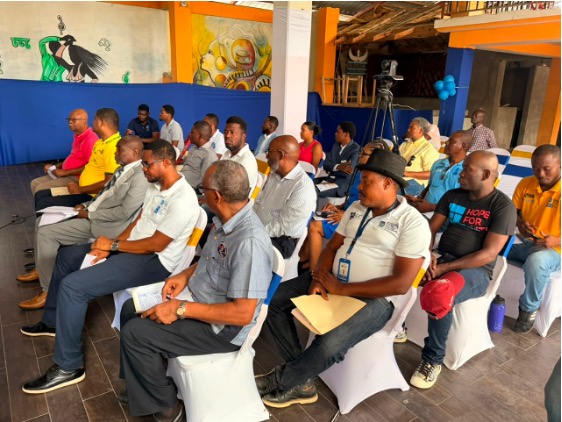 We have, for the Global Grants, the seven Areas of Focus. So make sure you stay with one only. Don’t try to put two or three areas of focus in the same application. For example, ‘I’m going to apply to deliver drinking water, and for that area, you are going to include hygiene, and sanitation. You stay in one area, focus, water. So, don’t go to another focus, like, disease prevention, stay focused on one objective. Don’t take on too many objectives because you are going to make the application too heavy to manage. So that’s another pitfall.
Another thing that’s important is that you understand the timeline. From the experience we have, the application for a Global Grant takes time. And I usually tell that to the beneficiaries. We are not the big NGOs, like World Bank, USAID etc. They have huge budgets already, ready to give to the government or to the community. No, we are volunteers, putting together our efforts, our experience, our resources – to get what we need. So it takes time. You need to understand the timeline, all the costs involved.
Very important: Make sure you have very good communication with your international audience. We have had some issues with a global grant, where, because of the lack of communication between those two groups, it has affected the project.
So, the experience we have in Les Cayes, we have very great communication. Let’s take an example. We had a campaign that inaugurated the other day, where we have a great team. We called it Global Grant Number Two and we formed a WhatsApp group. We met every Friday at 2 p.m. And we don’t move without them, and they don’t move without us. So we have the meeting, we discuss, we make suggestions, we put forward any ideas.
And myself, I am a surgeon. I don’t have the background experience they have. So I’m learning from them, you know, and that’s interesting. So that’s important: the international partnership between local Haitians and international Haitians.
The budget. Make sure you don’t go too high. Make sure you have all expenses, very clear and transparent. In the bidding process, you are going to ask at least three companies.
Avoid conflict of interest. Anytime you have Rotarians, you know that they could sell the same product that you will need for the project. Make sure that these Rotarians in the club will not benefit from the project. Except, we have cases in Les Cayes, where you cannot find those materials except for this one Rotarian. So we wrote to the Rotary Foundation, explained the situation, and they authorized us to accept that company.
Sheila Bethel
The next thing is the time frame. From initial assessment. I’m not talking about the actual applying for the grant. I’m talking about the assessment, liaison, surveys, drilling infrastructure. What kind of time frame did it take for you to actually get the well dug, opened, operating for the local people?
PDG ROBERT LEGER
It depends. For example, it took a long time because there are the bidding processes, and they could not find companies with all the materials already in place, to do the drilling process. Finally, they found one, but they had to do some repairs. Don’t forget, Haiti now has some logistical problems due to travel issues within the country. You cannot travel easily or safely from south to the northern part or vice-versa. So materials have to arrive by boat.
As soon as all the MOUs are signed, everything is okay. It doesn’t take a long time. And you have the material already in place. It depends also, don’t forget, that Haiti is full of mountains. It depends where the community is placed also. That’s important. The time is due to many internal issues that we are confronting now. But let’s put one month maximum.
Sheila Bethel
I know that with one time in Haiti, they tried to dig a well, and it didn’t work, and they had to dig somewhere else. Is that something that happens very often or was that just one time?
PDG ROBERT LEGER
Oh, no, not often. It has happened in, for example, the northern part where they could not find good drinking water. Most of the time, yes, we find water.
Sheila Bethel
How many people do you think have been impacted? I just listened to PDG Dominic Bazin’s talk at the recent Assembly. And I was delighted to hear the way she focused in on the people that were impacted. She honed in on the mothers, the children, et cetera. What do you think it means for the pattern of the lives of these people? Like kids in school instead of carrying water, et cetera.
PDG ROBERT LEGER
Oh, it makes a big impact. For example, I told you about this project we had, there were 84 families, we put gutters around their houses and they now have a 600 gallon water tank. We asked the people what life was like before. They told us: ‘before we used to wake up to go find fresh water. Three, four, in the morning, because you have to go down the mountain, and when you arrive, there’s a long line, after that you have to come back to the mountain. But now we wake up about six, seven in the morning, if the kid does have to go to school, six o’clock in the morning.’ That’s the best ‘thank you’ you can receive when you hear that.
So, the impact is enormous, because the parents have more time for themselves, for the kids, for the family, for their work. The kids have more time to get ready to go to school. And physically speaking, going down and then coming back with water on the top of your head, it’s physically demanding. So, the impact is enormous.
Don’t forget also the hygiene impact because that’s important. You don’t just give water, it’s using water also with hygiene and sanitation. The impact on their health is important. When you give drinking water to people, together with hygiene, sanitation it has a lot of impact on the population.
Sheila Bethel
So, overall, your generalized words of advice for anyone seeking a global grant. You homed in on all the specific requirements. But, do you have words of encouragement? Because I know a lot of Rotarians are scared of applying. They think, is this really worth a global grant, is our project ‘worthy enough’? Is there anything you could say to encourage these Rotarians to forge ahead and go for it?
PDG ROBERT LEGER
They have first to really rationalize the project, understand the project. The second thing is important, they need to know more about it from the Learning Center, Grant Center, the e-learning, there they can learn more about a community assessment. If you don’t understand the basics, it’s discouraging. But when you understand them, you see the impact that you can make, so they should go to the e-learning center.
You have to be patient, because things are not done very fast. It takes some time but the end is worth it.
Sheila Bethel
You mentioned that you had applied for more than one global grant. Did you follow the same setup pattern or did you have to completely reinvent it both times? The area was different, perhaps, or the infrastructure needed was different. Or did you just repeat what you’d done before?
 PDG ROBERT LEGER
Oh, no. Usually, when you have some experience, you follow the basic steps. But not all communities are the same. They have some differences. So you have to go to listen to them and to see what are the differences. And you have some areas where people already have an idea about hygiene and sanitation. But you have other areas where they know nothing about that. The approach is different, depending on the situation you face.
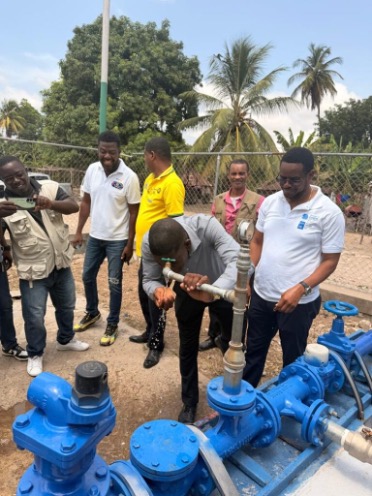
The second thing is that, for example, Global Grant Number Two, we found a well that was already drilled many years back. We saw the well. They wanted help to find a solar system. So we found a partner to build an office, to contain the generator and the electronic parts, because the Foundation does not build houses.
Sheila Bethel
You just said something that I think a lot of people don’t remember or never knew in the first place: Rotary does not build houses. That’s something that anybody that’s looking to do something similar to this needs to take into account. Do you think this is something that people haven’t really understood or know?
PDG ROBERT LEGER
There are special situations where, for example, for the earthquake in 2010, we built a school, it was a special situation.
It is OK to build a small kiosk, where they can put a water tank, and a solar panel. That’s part of the global grant the Foundation has no problem with. So the actual structure over the well could be included.
Sheila Bethel
How many clubs were involved in each of these grants – locally in Haiti and internationally.
PDG ROBERT LEGER
Locally, only Les Cayes. And internationally, for the funding, many clubs send a part of the funds, $1000, $2000, you find DDF (Designated District Funds). We were lucky to find many DDFs. In Haiti, in Les Cayes, we raised cash also. I think our club raise $1200.
Last time we went to a district conference, I talked to some Rotarians and grants came in. In The Bahamas, we had people pledging funds. Many clubs can pledge for some amount, but you have to have two main clubs, one local and one international.
Sheila Bethel
One thing that I know has been a bit of a stumbling block for some clubs, because I’ve actually been in this discussion with them, they don’t know how to set about finding other sources of funding, i.e. Other clubs outside their country. So, do you have any advice on how to set about finding clubs as partners?
PDG ROBERT LEGER
What I have done myself is when I meet Rotarians, at a big conference or at a convention. Many times, I have a video of the project on my phone, and I talk about it, – we are looking for partners. And often they said, oh, yes, send me the resume. So I do!
I found many Rotarians in Kingston at the last District Conference, who were nterested and they went back to their clubs, and they presented the project to their clubs, and several said our club decided to send $2000, or to send $5,000.
So, and I talked to our the RFC, to PDG Deborah. I said we need DDF. What can you do for the project? Usually you need to go to district conferences, to district assemblies, to the international convention, if you have a project, have a resume in your phone, and talk to the people about your project. If interested, you just mail it to them. That’s what I’ve done.
Sheila Bethel
Marketing the finished product. Dominique Bazin’s recent talk about how ithe people brought it to life, that it’s impacted these people, how it’s impacted them. Possibly with marketing our finished products, our wells we’re too, clinical, perhaps: we have built this, well, we now have water going to X number of families.
We had buy-in from these people, but we never go out there and say, you know, Madame X and her 4 children are now are living a much better life. You touched on it earlier. But what do you think we should be doing?
PDG ROBERT LEGER
Having an exact number of how many people benefitted from that project,- facts and numbers – that’s a very good idea. But because the project is finished, and as I told them, when I thanked everyone about the inauguration the other day – the work is really starting now, not finishing. It’s starting now.
Sheila Bethel
So, what’s next? Will you go out and talk to the people to assess the real impact on their lives, on their families?
PDG ROBERT LEGER
I think that’s a very good idea. We will form a committee to address that.
And another point important. Thanks to this inauguration, in the center of the city they used to receive water for from 2 to 4 hours. Now they’re receiving it for more than 8 to 10 hours.
Sheila Bethel
What actually facilitated that?
PDG ROBERT LEGER
Because of the volume of water that the system is sending to the water system. Now, the volume is so big, they need to build a bigger system, because we provide so much water that the system is too small.
And in the city, there’s an increasing number of people, because the last census, in 2015, in Cavaillon, there were 2,000 or so people, now, because of the situation in Port au Prince, it’s increased to almost 5,000 people.
All the cities in Haiti are suffering all this huge amount of people that arrive fleeing from Port au Prince.
Sheila Bethel
Thank you so much PDG Robert, I hope that you have inspired other Rotarians to move forward with Global Grants and also, to step up and assist the residents of Haiti.
HANWASH Going Forward….
Building on these local successes, the Haiti National Water, Sanitation and Hygiene Initiative (HANWASH)—while continuing to encourage individual Rotary clubs and districts to pursue Global Grants for Haitian communes—is evolving from overseeing isolated, single-site projects to leading a broader, program-based model through Rotary’s Programs of Scale initiative. Under this expanded effort, known as Collaboration for Sustainable Water and Sanitation Systems in Haiti, Rotary clubs in Haiti and the Caribbean are partnering with nonprofits like Haiti Outreach and government agencies like DINEPA to establish sustainable, fee-for-service water and sanitation systems across larger geographic regions. By training local operators, working with community leaders across 40 urban and rural communities to build demand and promote healthy hygiene practices, and ensuring water service providers reinvest revenue back into regional regulatory oversight, this program-based approach aims to reach roughly 70,000 people across Cavaillon, Ferrier, and Pignon and reduce waterborne diseases by 25% by 2030.